
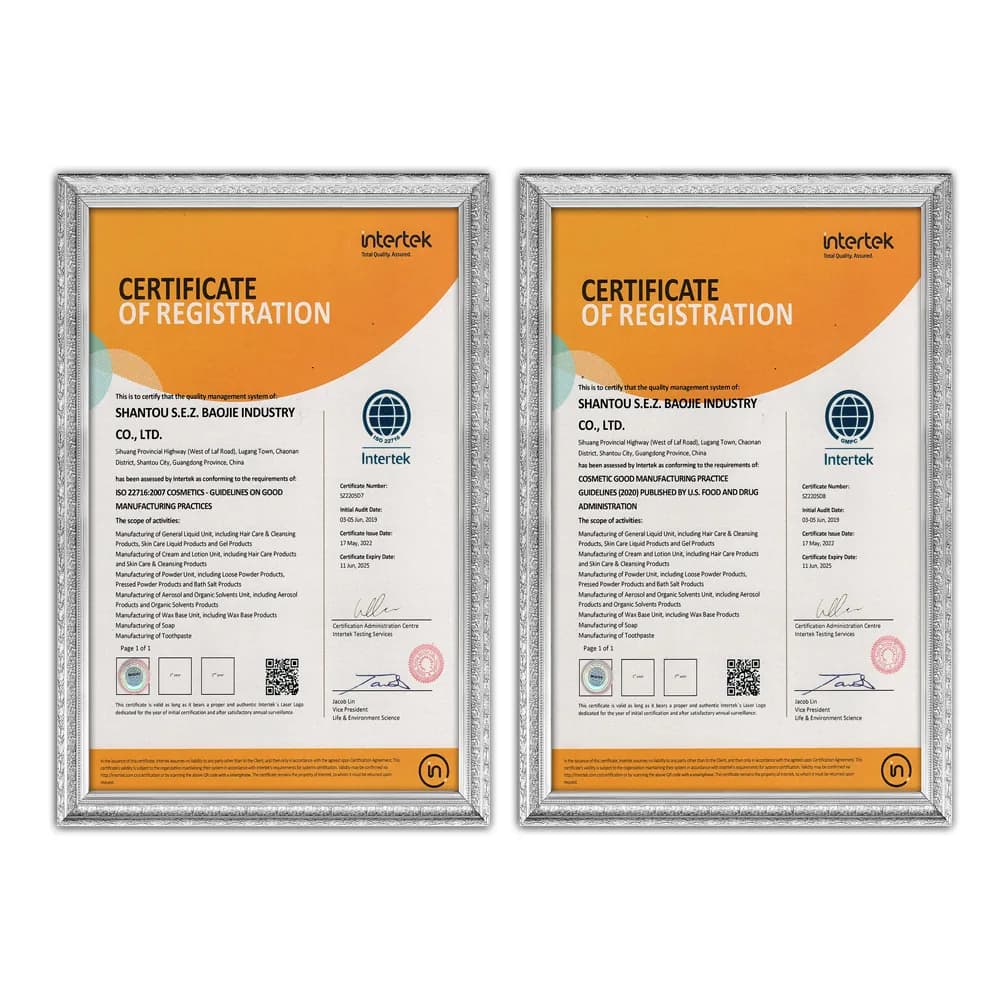
GMP and ISO 22716 information can support cosmetics supplier review, but a certificate image should not be treated as evidence for every product, site or market question. A buyer needs to verify what the document covers, then examine how the stated system connects to materials, instructions, production, controls, records and release for the proposed order.
ISO 22716 provides guidance for production, control, storage and shipment quality practices for cosmetic products. Its published scope does not make it a finished-product efficacy standard, and it does not replace market-specific responsibilities. FDA cosmetics guidance similarly directs attention to facilities, equipment, raw materials, production, laboratory controls, records and complaints. The useful buyer question is therefore not simply whether a logo is present, but how the system operates.
Verify certificate identity and scope
Read the legal holder, address, standard, scope, certificate number, issue and expiry dates and issuing or assessment body. Compare the address with the site expected to manufacture the order. If the supplier group has several entities or locations, ask which one the document applies to and which one will compound, fill and invoice the product.
A valid system certificate may still have a scope that is broader or narrower than the buyer expects. Do not infer product certification, market approval or batch acceptance from the document. Save the version reviewed and note when validity or scope should be checked again.
Ask how the system works on the factory floor
Connect certificate language to operating controls. Ask how raw materials and primary components are identified and released, how instructions are approved, how equipment is cleaned, how line clearance is recorded and how in-process and finished-product checks are reviewed. Discuss training, change control, deviations, rejected materials and complaint handling.
Use a redacted example or one project trace where possible. The goal is not to obtain another customer's confidential data. It is to see whether product identity, decisions and responsibilities remain connected from approved input through finished release.
Separate facility, formula and batch records
Facility documents describe an entity, site or management-system scope. Formula records identify a composition or product specification. Ingredient and component documents cover the supplied material. Batch records and results refer to a produced lot. These are different evidence layers and become available at different project stages.
When requesting a COA, safety data or other technical file, state what it should cover and why it is needed. A generic example can show format, but it should not be presented as the document for a formula or batch that has not yet been confirmed or produced.
Link the approved sample to controlled production
Ask how the approved sample is identified and translated into production instructions and acceptance criteria. Record formula revision, sample code, fragrance, colour, target physical characteristics, pack basis and artwork status. Determine which changes require a new sample, updated specification or additional review.
This is where a management system becomes commercially relevant. If a buyer approves one sample but production uses a changed fragrance, component or instruction without controlled review, the certificate itself does not resolve the project failure.
Keep product testing in the product context
Testing and safety support should be discussed for the final formula, intended use, component and destination market. An existing report may be informative, but its product identity, method, conditions and conclusion must match the question being asked. A result for a related base or previous component should not be silently extended to a new combination.
Agree which evidence is reviewed during development, which is required before production and which is produced for the finished batch. Name the party responsible for deciding whether the planned evidence is sufficient for the intended market.
Confirm market responsibilities before artwork
The brand, importer or responsible person should understand the legal route for placing the finished product on the destination market. Clarify which information the manufacturer provides and which safety, notification, responsible-party, claim or label decisions remain outside the factory's general system certificate.
For the United States, facility registration and product listing should not be described as cosmetic approval. For the European Union, the responsible-person, safety-report, product-information and notification duties should be planned for the final product. Other destinations require their own current review.
Use a document and evidence matrix
- Document title and the question it is intended to answer
- Legal entity, site, material, formula, component or batch covered
- Revision, issue date, validity and issuing party
- Required language and file format
- Supplier owner and buyer review owner
- Project stage when the document can exist
- Decision that depends on its review
- Action if identity, scope or result does not match the project
Turn the review into clear next steps
Classify each item as accepted, clarification required or not yet available. Do not request every possible certificate without a purpose, and do not close an item because a file name looks familiar. A concise matrix reveals whether the missing evidence blocks supplier selection, sample approval, artwork, production or shipment.
King Metis provides current factory quality-system information for supplier review. Product-specific documents and testing are discussed where applicable after the formula, sample, packaging, destination market and order requirements are defined.